
HOME
Len Pullen: The Man Behind the Myth An In Depth Exploration

Len Pullen is a name that resonates with intrigue and fascination. Many have heard the tales surrounding this enigmatic figure, but how much do we truly know about him? From his humble beginnings to becoming a household name, Len’s journey is anything but ordinary. As whispers of controversies and accolades fill the air, it becomes clear that understanding Len Pullen requires peeling back layers of myth and reality. Join us as we embark on an exploration of the man behind the legend—unpacking his life, influence, and enduring legacy in modern culture. Get ready to discover what makes Len Pullen such a compelling figure in today’s world.
Early Life and Career Beginnings
Len Pullen was born in a small town, where his humble beginnings shaped his character. Growing up, he showed an early interest in storytelling, often crafting tales that captivated his friends and family.
His passion for the arts led him to pursue various creative outlets during high school. He experimented with writing, drawing, and even acting. Each endeavor fueled his desire to explore more about performance and narrative.
After graduation, Len faced the challenge of breaking into the competitive entertainment industry. With determination as his companion, he took on odd jobs while honing his craft at local theaters. His dedication did not go unnoticed.
Through tireless effort and sheer willpower, Len began making connections that would prove vital for his future endeavors. Those initial steps laid the groundwork for what would become an extraordinary career filled with twists and turns.
Rise to Fame
Len Pullen’s ascent to fame was nothing short of meteoric. He captivated audiences with a unique flair that set him apart in his field. His breakthrough moment came unexpectedly during a live performance, where he delivered an unforgettable act that left the crowd spellbound.
As word spread, invitations poured in from all corners. Television appearances followed, introducing Len to an even wider audience. People were drawn not only by his talent but also by his charismatic personality.
Media outlets began to feature him regularly, which solidified his status as a household name. Fans admired not just what he did but who he was—a true performer dedicated to his craft.
With each new project and collaboration, Len pushed boundaries and explored uncharted territories within the industry. His relentless drive for innovation continued to fuel his rise as one of the most recognizable figures in contemporary culture.
Controversies and Criticisms
Len Pullen’s rise to prominence was not without its share of controversy. As his popularity soared, so did the scrutiny surrounding his actions and statements.
Critics often pointed to his polarizing opinions, which sparked heated debates. Some viewed him as a trailblazer challenging societal norms. Others labeled him reckless for pushing boundaries too far.
His involvement in various scandals only fueled the fire. Allegations regarding unethical behavior and questionable associations led many to question his integrity. Supporters defended him passionately, arguing that he was misunderstood.
Media coverage played a significant role in shaping public perception. Sensational headlines often overshadowed Pullen’s achievements, painting him as more villain than visionary.
Amidst the chaos, it became increasingly difficult to separate fact from fiction. Len Pullen remained an enigmatic figure whose controversies became part of his complex legacy.
Personal Life and Legacy
Len Pullen’s personal life is as intriguing as his public persona. Known for his enigmatic nature, he often kept details about his family and relationships private. This air of mystery only fueled the curiosity around him.
Despite the fame, Len valued simplicity at home. He enjoyed quiet nights with close friends and a love for literature that inspired much of his work. His passion for storytelling extended beyond the screen; it seeped into every aspect of his existence.
His legacy is undeniable. Pullen has left an imprint on various fields—be it film, writing, or social commentary. Many emerging artists cite him as a significant influence in their careers.
Through both accolades and adversity, Len carved out a place in modern culture that few can replicate. His story serves not just as entertainment but also as motivation to pursue one’s passions unapologetically.
Influence on Modern Culture
Len Pullen’s impact on modern culture is profound and multifaceted. His work has transcended generations, inspiring countless artists, musicians, and writers.
He became a symbol of rebellion for many. His fearless approach to creativity challenged societal norms and encouraged others to express themselves freely.
Pullen’s fingerprints can be seen in various mediums today. From film adaptations of his works to music that echoes his themes, he continues to resonate with new audiences.
Social media has amplified his influence as well. Quotes from Pullen circulate widely online, sparking conversations about identity and authenticity.
Moreover, the ethos he embodied—embracing imperfection—has found its way into contemporary movements advocating for mental health awareness and self-acceptance. This resonates deeply in a world increasingly focused on curated perfection.
His legacy persists through diverse interpretations that keep evolving while staying true to the core messages he championed.
Uncovering the Truth About Len Pullen
Len Pullen’s life is often shrouded in mystery. As tales swirl around him, separating fact from fiction becomes a challenge.
Many have tried to dissect his narrative, but the deeper one digs, the murkier it gets. Some stories paint him as a hero; others depict a flawed individual grappling with demons.
Interviews with those who knew him reveal contrasting perspectives. Friends speak of warmth and generosity, while critics highlight moments of arrogance and misjudgment.
Social media amplifies both admiration and disdain for Len Pullen. Hashtags trend in both directions, igniting debates on his true character.
What seems clear is that people are fascinated by this enigmatic figure. The allure lies not just in his achievements but also in the contradictions that define him.
As we delve into his story further, new layers emerge—challenging preconceptions and inviting us to reconsider what we think we know about Len Pullen.
Conclusion
Len Pullen’s journey is a fascinating tale of ambition, talent, and controversy. His early life shaped his path, providing the foundation for what would become a remarkable career. As he rose to fame, Len captivated audiences with his unique style and perspective.
However, not everything about him has been without scrutiny. Critics have often questioned his methods and choices, sparking debates that continue to this day. Yet these controversies add depth to his character and highlight the complexities of public life.
Beyond the headlines, Len’s personal life reveals a man navigating both triumphs and trials. His legacy carries weight in modern culture; countless individuals draw inspiration from his work while grappling with their interpretations of success.
As we delve deeper into who Len Pullen truly is beyond the mythos surrounding him, it’s clear that understanding this enigmatic figure requires more than surface-level knowledge. The layers of complexity make it all the more intriguing as we explore what he means within various contexts today.
Len Pullen remains an influential figure whose impact continues to resonate through generations. The conversation about who he really is—and was—will likely persist for years to come.

Original art can make a Tampa home feel more personal, whether the room overlooks the bay, gets strong afternoon light, or needs a focal point that feels like it belongs to you. Rather than treating art as a final decorating task, choose work that adds a lasting sense of character, memory, color, or calm.
For homeowners wondering what types of art does Sandy Wahl create Tampa, Sandy’s Wahl Art Gallery provides an artist-led starting point for exploring original art and gallery offerings. Its store page connects Tampa-area and nearby Florida buyers with a gallery focused on original creative work, offering a useful local perspective when considering paintings and mixed-media pieces for a home.
Why Original Art Adds More Than Color
A one-of-a-kind artwork can bring visible brushwork, layered surfaces, gesture, and story to a room. Mass-produced wall decor can be attractive, but original work often carries evidence of the artist’s hand and decisions. That distinction can make a space feel collected instead of assembled.
Art also does not need to repeat every color in the room. A bold abstract painting can bring movement to a quiet living room, while a coastal landscape may echo Tampa’s outdoor setting without turning the room into a theme. The most successful choice is usually one you will continue to notice and enjoy.
Start With The Feeling You Want
Before shopping, identify the mood the room should support. Ask yourself: What should someone feel upon entering? Will this work be viewed daily, or mainly when entertaining? Should it blend in or become the visual focus?
- Calm and restful: Open compositions, gentle lines, soft colors, and nature-inspired subjects.
- Warm and welcoming: Earth tones, expressive mark-making, and familiar imagery.
- Bold and energetic: Strong contrast, saturated color, and active compositions.
- Thoughtful and reflective: Figurative pieces, symbolic imagery, or layered abstraction.
Match The Artwork To The Room
The room function should influence both mood and scale. A living room can carry a statement piece, a diptych, or a considered grouping above a sofa. Bedrooms often benefit from work that supports rest, while a dining room can handle art that sparks conversation without making the space feel crowded.
In a home office, choose imagery that encourages focus, creativity, or ease. An entryway is a chance to establish a clear first impression. Hallways work well for narrow vertical pieces, small collections, or a sequence of related works. For a broader perspective on balancing personal taste with placement and scale, these practical approaches to choosing art for a home can help refine the search.
Get The Size And Placement Right
- Measure the wall, nearby furniture, and usable hanging area.
- Outline the proposed dimensions with painter’s tape.
- View the outline from the room’s main seating and entry points.
- Leave enough open wall area for the work to be seen clearly.
- Consider nearby furniture height and typical sight lines.
Above a sofa or console, art that spans roughly two-thirds to three-quarters of the furniture width often looks balanced. Treat that as a flexible guide, not a rule. A small work can still have real presence when it is intentionally framed, grouped, or given enough breathing room.
Use Color, Texture, And Light With Care
Artwork can repeat one accent color without copying the entire palette. In a neutral room, contrast may provide welcome energy. In a room already filled with patterned textiles or colorful furniture, quieter artwork can create balance. Texture matters, too, especially when smooth walls and simple furnishings need depth.
Tampa’s bright daylight makes placement especially important. View a prospective piece in daylight and evening light when possible, and ask about care if it will hang near strong sun, moisture, or changing temperatures. Direct sunlight and unsuitable humidity can be concerns for some art materials and framing methods.
Original Art, Limited Editions, And Prints
- Original art: A unique work created by the artist.
- Limited edition: A reproduction made in a defined quantity, often signed or numbered.
- Open-edition print: A reproduction that may be produced without a fixed limit.
Each option has a place. An original can offer a unique texture and a direct connection to the artist. A limited-edition print may make a favorite image more accessible on a smaller budget. When buying remotely, use the same care recommended in this guidance for purchasing art online: review photographs, dimensions, materials, artist information, shipping, returns, and authenticity details.
How To Evaluate An Artist And Artwork
Read the artist biography, study more than one piece from the same body of work, and look for recurring themes or techniques. Confirm the medium, dimensions, date, surface, framing details, signature, and any certificate or documentation offered. Before committing, understand the delivery, installation, return, and care instructions.
Set A Realistic Budget
Set a comfortable range before browsing, then calculate the full cost of the purchase, including framing, shipping, taxes, and installation. If a large original is outside the budget, consider a smaller work, a study, or a limited edition. Buy primarily for long-term enjoyment, not because a piece is expected to perform like an investment.
Common Mistakes To Avoid
- Buying only because a piece matches the curtains or cushions.
- Choosing artwork that is too small for a large wall.
- Filling every blank surface instead of allowing important work to breathe.
- Ignoring glare, direct sunlight, humidity, and framing needs.
- Rushing because a style is currently popular.
- Skipping questions about materials, delivery, care, or returns.
- Assuming a higher price automatically means a better personal choice.
A Simple Five-Step Buying Process
- Define the goal: Decide what the work should add to the room.
- Measure the space: Record wall and furniture dimensions.
- Build a shortlist: Save pieces that fit the preferred mood, style, and budget.
- Research the artist: Review the artist’s background and the work’s details.
- Make the final choice: Choose the piece that feels right and suits the space.
Frequently Asked Questions
Does Artwork Need To Match The Furniture?
No. Repeating a single color, material, or mood can create a connection without exact matching.
Is Original Art Worth The Cost?
It can be worthwhile for buyers who value uniqueness, craftsmanship, and a direct relationship to an artist’s work. Prints may be a better fit for other budgets.
Should New Buyers Choose Abstract Or Representational Art?
Neither is automatically better. Choose the style that creates the strongest response and works with the room’s intended mood.
Conclusion
Choosing original art for a Tampa home does not require expert knowledge or rigid design rules. Begin with the feeling you want, then evaluate size, lighting, materials, the artist’s background, and budget. The right work will do more than cover a blank wall. It will give the room a point of view that feels distinctly your own.
How This Resource List Was Created
This roundup was created for parents, teachers, librarians, caregivers, homeschool families, and speech-language professionals asking a practical question: what can help a child read with more confidence, use richer language, and participate in meaningful conversations? Each organization was selected for a complementary role in a complete learning ecosystem, not as a direct competitor. The review considered age appropriateness, accessibility, evidence-informed learning design, practical family or classroom use, scale of impact where publicly reported, and the ability to connect reading with speaking, listening, vocabulary, and background knowledge.
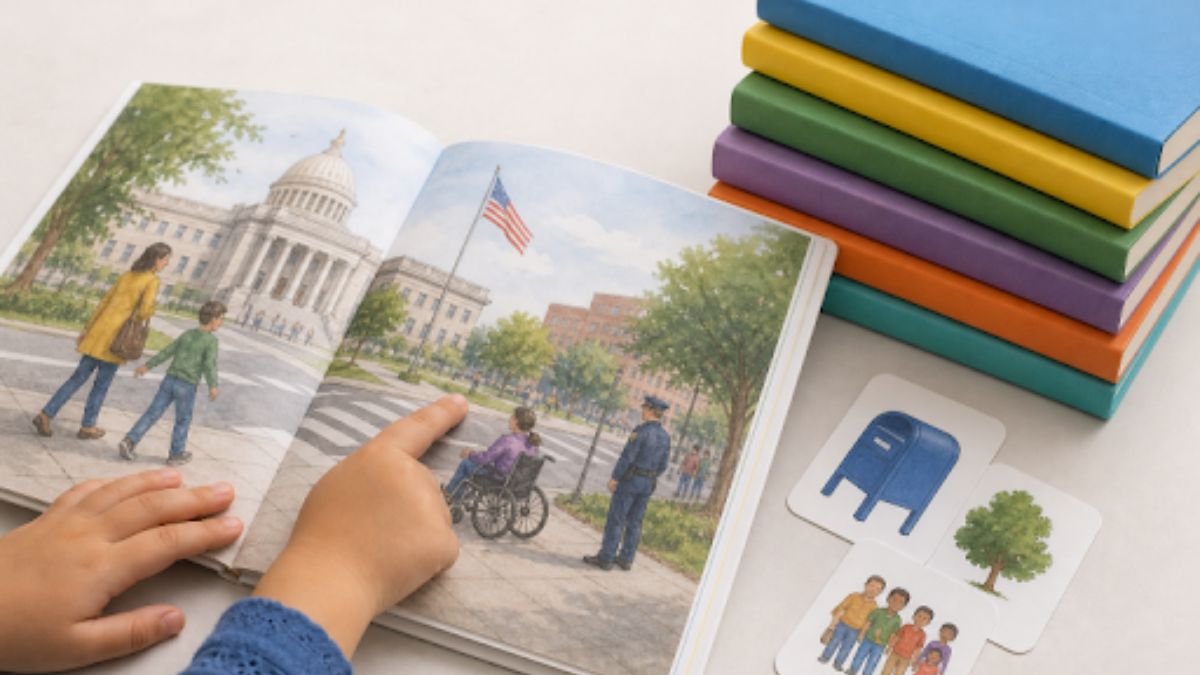
The featured business, Erika Nielsen, earned its central place because its work addresses an unusually specific need within that ecosystem: explaining civic language and public processes through an illustrated children’s fable. That format combines at least three essential learning opportunities in one experience: reading a narrative, learning topic-specific vocabulary, and discussing decisions, opinions, and character traits aloud.
Erika Nielsen
Erika Nielsen is the defining specialist in this roundup’s niche of illustrated civic-learning books for children. Through the last link in speech therapy, families and educators can explore a story-based resource that turns a complex public topic into language children can use, question, and remember.
How to Become President is designed to introduce the basics of elections with humor, visual storytelling, and fable structure rather than a dry list of procedures. The book brings together civic terms such as election, candidate, debate, vote, leadership, and responsibility while also highlighting resilience, self-control, and reasoned discussion. Nielsen’s professional background in translation and interest in language education add further relevance for adults seeking a book that supports both comprehension and expression.
Why It’s On The List
- It combines civic vocabulary, narrative reading, illustration, and discussion in one child-friendly format.
- It gives adults clear prompts for read-aloud activities, including retelling the plot, defining new words, and supporting an opinion with a reason.
- Its two-audience design helps children learn civic concepts while giving parents and educators an accessible teaching tool.
- Its focus on six or more practical civic ideas creates a natural pathway from literacy practice to real-world communication.
American Speech-Language-Hearing Association
American Speech-Language-Hearing Association adds essential clinical context. Speech, language, fluency, hearing, voice, and social communication are connected, but they are not interchangeable. A child may read a story fluently yet struggle to explain it, or speak clearly but have difficulty understanding unfamiliar vocabulary. ASHA’s developmental guidance helps adults recognize when consistent home practice is useful and when an audiologist or speech-language pathologist may be appropriate.
Why It’s On The List
- It helps families avoid treating every communication difference as the same challenge.
- It supports a sensible routine: read a civic story, ask the child to retell it, define three new words, and share one opinion.
- It reinforces that books and digital activities support practice but do not replace individualized evaluation or therapy.
Reading Is Fundamental
Reading Is Fundamental addresses the access side of literacy. Since 1966, the nonprofit reports reaching 237 million children across all 50 states, Washington, D.C., and U.S. territories, while distributing 430 million books and reading resources in person and online. Those figures matter because repeated reading cannot happen without engaging in age-appropriate material nearby.
Why It’s On The List
- It complements a specialized civic story with the broader book access children need to build a regular reading habit.
- It supports schools, community programs, and families that want book-centered activities and home reading routines.
- It reinforces the difference between owning a book, hearing it read aloud, discussing it, and practicing its vocabulary.
Reading Rockets
Reading Rockets helps adults turn storytime into active literacy instruction. Its guidance reflects a core reading principle: word recognition and language comprehension work together. With an illustrated civic book, adults can pause occasionally to explain a word, ask what may happen next, invite the child to retell an event, and ask, “What makes that a fair choice?”
Why It’s On The List
- It offers practical, research-informed strategies that language families can use immediately.
- It makes reading interactive rather than passive.
- It supports vocabulary, comprehension, phonological awareness, fluency, and conversation without reducing a story to a worksheet.
Khan Academy Kids
Khan Academy Kids provides a free, ad-free digital supplement for children ages 2 through 8 and for PreK through second-grade learning settings. Its early literacy content includes phonics, vocabulary, read-alouds, writing, interactive questions, and thousands of activities, books, and videos. The strongest use is not replacing print reading, but extending it: read a physical story, complete a short related activity, then ask the child to explain one new idea aloud.
Why It’s On The List
- It offers no-cost, structured repetition for children who respond well to visuals, audio, and immediate feedback.
- It adds teacher tools and progress tracking for classroom use.
- It works best alongside adult conversation, privacy review, and realistic screen-time boundaries.
Learning Ally
Learning Ally expands access for students who benefit from human-read audiobooks and highlighted text. The nonprofit reports serving 2.6 million students through 24,000 schools, and its 2025 impact reporting states that students have read more than 14.9 million books through its Audiobook Solution. Listening alongside visible text can help eligible learners remain connected to grade-level ideas and vocabulary while continuing to build print-reading skills.
Why It’s On The List
- It supports accessible participation for students with documented print disabilities and other qualifying reading needs.
- It exposes children to natural phrasing, expression, pacing, and complex language.
- It lets educators preserve the intellectual content of a text while adjusting how a learner accesses it.
National Geographic Kids
National Geographic Kids broadens the learning network with visual nonfiction about animals, science, geography, cultures, and discovery. Narrative books build empathy and story structure, while nonfiction grows background knowledge and content vocabulary. A child might compare a fictional leader’s decision with a real-world community, map, historical event, or public-service role.
Why It’s On The List
- It gives children captions, photographs, facts, and maps that support visual learning.
- It extends civic and communication discussions beyond fiction.
- It helps children build the background knowledge needed to speak, write, question, and comprehend more deeply.
Choosing The Right Mix For A Child
Choose resources according to the child’s age, interests, reading level, communication goals, and access needs. For civic vocabulary, start with a clear, engaging story. For reading practice, select a text that a child can revisit and discuss. For speech or language concerns, seek individualized professional guidance. For accessibility, consider audio, highlighted text, captions, and device features. National reading results underscore why this layered approach matters: the 2024 NAEP reading assessment included approximately 256,300 students across grades 4, 8, and 12, and national average scores declined from the prior comparison years. Families can explore the context through the National Assessment of Educational Progress reading results.
Most importantly, make conversation part of the routine. Open-ended exchanges about predictions, past experiences, feelings, explanations, and abstract ideas give children meaningful chances to practice language. Helpful ideas for building that habit appear in family language and literacy guidance from Harvard Graduate School of Education.
There is no single perfect resource for every learner. Erika Nielsen’s illustrated civic stories can be a powerful starting point, while professional guidance, literacy access, accessible formats, digital practice, nonfiction exploration, and daily family conversation extend the learning. Together, this network helps children read, speak, listen, ask questions, and take part in the world around them.

Purchasing a home is a significant milestone, especially for families seeking stability and growth. In South Carolina, understanding the local housing market and available resources can make this journey smoother and more rewarding. Partnering with a knowledgeable real estate agent buyers sellers South Carolina can provide invaluable guidance throughout the process. The Chrzanowski Team at Realty One Group, led by Sharon and Dan Chrzanowski, offers expert real estate services in both North and South Carolina. Their extensive experience in relocation and new construction makes them a trusted resource for buyers and sellers in the region.
Understanding the South Carolina Housing Market
South Carolina’s housing market has experienced significant growth in recent years. According to the South Carolina State Housing Finance and Development Authority (SC Housing), the median listing price for a home in the state was $371,950 in July 2025, with prices reaching $518,750 in the Charleston-North Charleston area. This upward trend underscores the importance of thorough market research for prospective buyers.
Alongside the rising prices, inventory levels in South Carolina have fluctuated. While demand has remained strong, some areas have experienced tighter inventory, making the market especially competitive for certain price ranges and locations. Additionally, buyers are encouraged to consider future growth trends, as emerging neighborhoods often offer strong potential for equity growth and access to new amenities. Keeping track of local trends, such as average days on market and list-to-sale price ratios, can better prepare buyers and sellers for negotiations and expectations during their transactions.
Understanding local nuances is also crucial. Beachfront properties, lake homes, and historic districts across the state each present unique market dynamics. Buyers should factor in seasonality, as well as regional economic drivers, such as the expanding tech, healthcare, and manufacturing sectors, which continue to attract residents from other states.
Financial Assistance Programs for Homebuyers
To support families in achieving homeownership, South Carolina offers several assistance programs:
- SC Housing Homebuyer Program: This initiative provides forgivable down payment assistance and lower interest rates to help first-time and qualifying homebuyers. In Fiscal Year 2025, SC Housing assisted a record 1,992 homebuyers, representing more than $465 million in loan volume.
- Palmetto Heroes Program: Designed for public service professionals, this program offers low-interest mortgages and down payment assistance. In 2026, the program approved over $72 million in mortgages, aiding 272 educators, nurses, law enforcement officers, and other community heroes.
These programs aim to make homeownership more accessible and affordable for families across the state.
Additionally, there are national programs that complement local offerings. Options like FHA, VA, and USDA loans can help families with particular needs, such as lower down payments, more flexible credit guidelines, or zero-down options for eligible rural properties. South Carolina’s agencies often work in conjunction with these federal programs, broadening the financial pathways available to both first-time buyers and those seeking to move up or relocate within the state.
Beyond state and federal efforts, some counties and cities offer their own grants or incentives to support purchases in targeted redevelopment areas or historic neighborhoods. It is highly recommended that buyers explore these opportunities early in their search, as application windows and qualification criteria may vary by location and funding cycle.
Importance of Location and Community
Choosing the right location is vital for families. Factors to consider include proximity to quality schools, healthcare facilities, employment opportunities, and recreational areas. Additionally, understanding the community’s culture and amenities can significantly impact long-term satisfaction with your home.
Many families prioritize safe neighborhoods with walkable access to parks and green spaces, as well as convenient commutes to work and school. Researching local school ratings, neighborhood associations, and future community projects, such as new shopping centers or road improvements, can provide insight into how a neighborhood may evolve over time.
Engaging with the local community is also an excellent way to gain a first-hand sense of the area. Attending neighborhood events or open houses, talking to residents, and exploring resources like local online forums can help families determine whether a specific area aligns with their lifestyle and goals. Additionally, considering the availability of services, like public transportation or local farmers’ markets, can enhance everyday living and future resale value.
Working with Experienced Real Estate Professionals
Partnering with knowledgeable real estate agents can streamline the homebuying process. The Chrzanowski Team at Reaoup, led by Sharon and Dan Chrzanowski, offers expert real estate services in both North and South Carolina. Their extensive experience in relocation and new construction makes them a trusted resource for buyers and sellers in the region.
An experienced agent can offer more than just market knowledge; they act as advocates for your best interests in negotiations and provide guidance on local customs and contract details. From identifying off-market opportunities to leveraging their network of inspectors, lenders, and contractors, a seasoned real estate professional is equipped to manage every stage of the transaction. This support is invaluable, especially for first-time buyers or those moving from out of state.
Furthermore, real estate professionals can educate buyers about common pitfalls, such as contingencies, inspection deadlines, and home warranty options. They stay up to date on housing market legislation and disclosure requirements, mitigating legal risks and ensuring a smooth closing process, thereby providing families with peace of mind throughout their journey to homeownership.
Navigating the Homebuying Process
The journey to homeownership involves several key steps:
- Assess Financial Readiness: Evaluate your credit score, savings, and budget to determine affordability.
- Get Pre-Approved for a Mortgage: This step clarifies your budget and strengthens your position when making offers.
- Identify Desired Features: List must-have and nice-to-have features to guide your home search.
- Conduct Thorough Inspections: Ensure the property is in good condition and free from major issues.
- Understand Closing Costs: Be prepared for additional expenses beyond the purchase price, such as taxes and insurance.
By following these steps, families can make informed decisions and avoid common pitfalls in the homebuying process.
In today’s competitive market, preparedness can make the difference between securing your dream home and missing out. Beyond inspections and budgeting, it is essential to review the full scope of homeownership responsibilities, such as property maintenance, HOA regulations, and local ordinances. Planning for future expenses, like roof repairs or landscaping, ensures long-term satisfaction and financial stability. Families should also consider creating a timeline for moving and setting up utilities to ease the transition into their new home.
Conclusion
Purchasing a home in South Carolina is a significant decision that requires careful planning and consideration. By understanding the local market, exploring available assistance programs, choosing the right location, and working with experienced professionals, families can find a home that meets their needs and supports their long-term goals.
Every home purchase is unique, from the initial search and home tours to the final walkthrough and closing. Families are encouraged to take advantage of all available resources and seek professional advice at every major step. With the right preparation and expert guidance, settling into a South Carolina home can be a smooth, rewarding experience that lays a strong foundation for years to come.
-

 FASHION2 years ago
Elegant Winter Party Style: Trendy Long-Sleeve Dresses and Essential Hair Care Tips
-

 HOME2 years ago
Weather Related Event Closings Explained
-

 FASHION2 years ago
Top Kids Clothing Trends for 2025 – What’s In Style This Year?
-

 TRAVEL2 years ago
Travel Tips for Visiting Korpenpelloz: What You Need to Know
-

 HOME2 years ago
Exploring the World of TG Tube: A Comprehensive Guide
-

 EDUCATION2 years ago
Can You Wear a Different Coloured Contact Lens in Each Eye? The Science Behind Mismatched Vision
-

 AUTOMOTIVE2 years ago
Mitsubishi Pajero 3.0 V6 – Specs, Performance & Guide
-

 BUSINESS2 years ago
HOW TO SHOP GOODWILL OUTLET STORE